
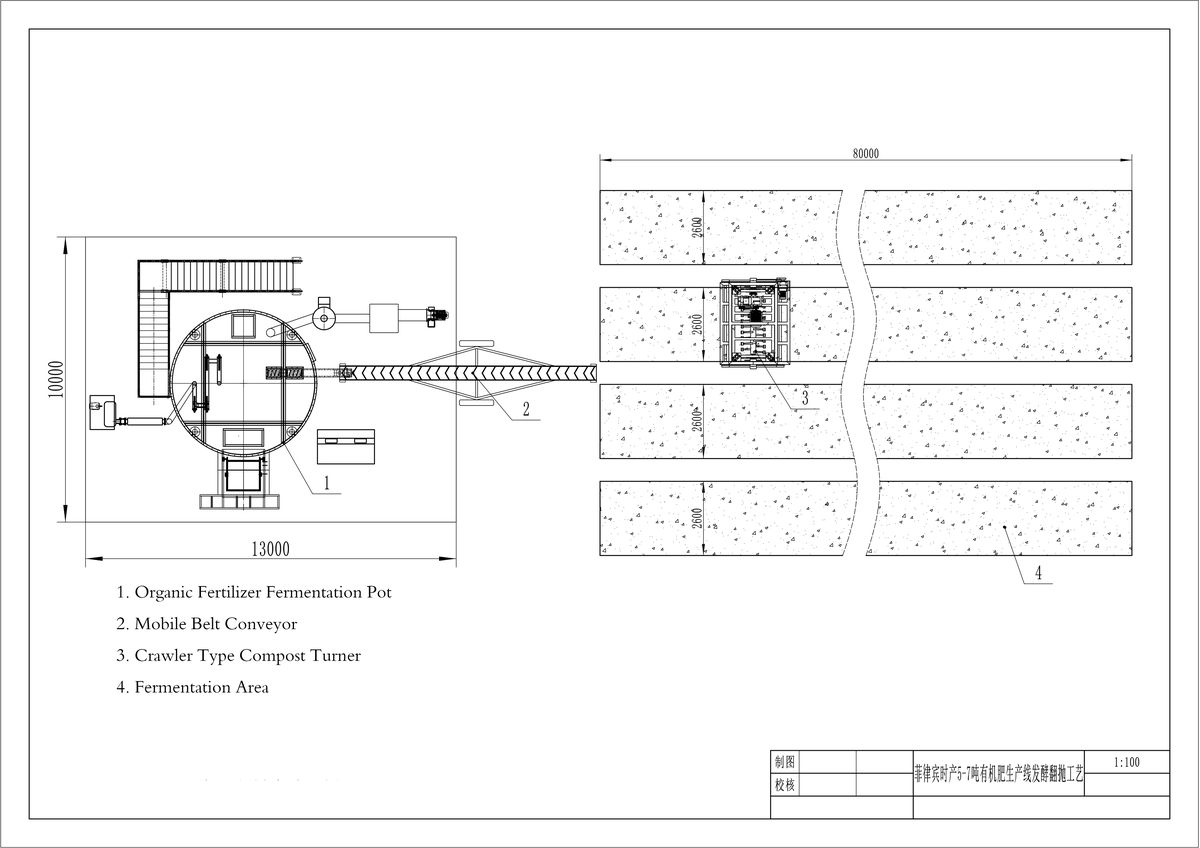
Organic fertilizer production line
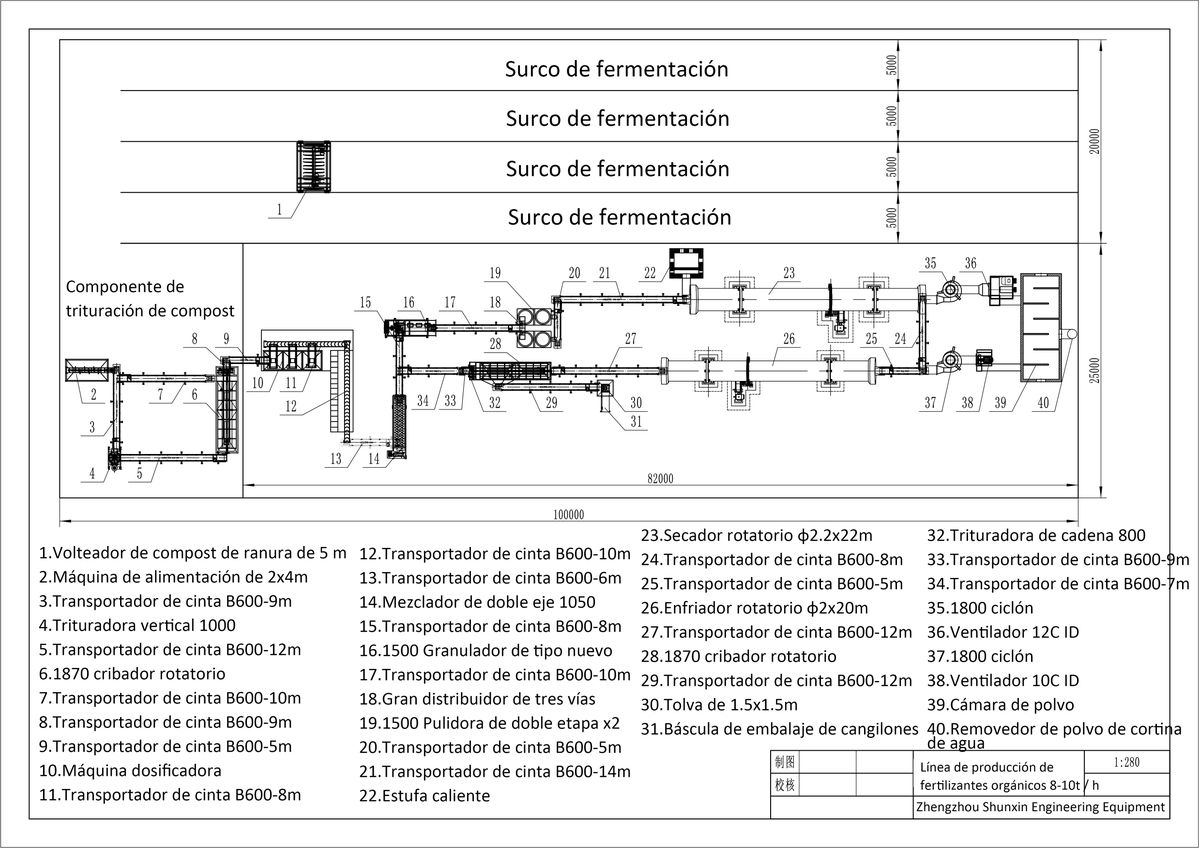
The core line for composted manure and organic waste: fermentation, crushing, mixing, granulation, drying, cooling, screening, coating and packing.
View details →A fertilizer production line is an engineering decision, not a shopping list. Here is how the five main line types differ, what each one costs to run, and how to choose the right one for your raw material and market.
Almost every fertilizer plant fits into one of five categories, and the choice is decided by two questions: where does the nutrient come from, and what form does the customer want to buy? If the nutrients come from composted organic waste, you need an organic fertilizer production line. If a biological inoculant is added to that compost, it is a bio-organic line. If the nutrients come from chemical salts blended and reacted together, you need a compound or NPK line. And if you simply blend ready-made granules without chemical reaction, you need a bulk blending (BB) line — by far the lowest cost per tonne of output.
The table below puts the five line types side by side. Every one of them can be supplied as a powder line, a granule line or a combination, and every one is built around the same core stages: raw material preparation, dosing and mixing, granulation, drying and cooling, screening and recycling, coating and packing.
| Line type | Nutrient source | Typical capacity | Granulation method | Investment level |
|---|---|---|---|---|
| Organic fertilizer production line | Composted manure, farm waste, organic sludge | 1–30 t/h | Disc or rotary drum (wet granulation) | Medium |
| Bio-organic fertilizer line | Compost plus microbial inoculant | 1–20 t/h | Disc or drum, low-temperature drying | Medium to high |
| Compound fertilizer production line | Chemical salts plus fillers | 5–50 t/h | Rotary drum or double roller | Medium to high |
| NPK compound line | Urea, ammonium phosphate, potassium salts | 5–50 t/h | Rotary drum granulation with steam | High |
| Bulk blending (BB) line | Ready-made granules of N, P, K and fillers | 5–50 t/h | No granulation — precision blending only | Low |
The core line for composted manure and organic waste: fermentation, crushing, mixing, granulation, drying, cooling, screening, coating and packing.
View details →How to add and protect living microbial inoculant through drying, cooling and coating so the finished bio-fertilizer still meets its viable-count specification.
View details →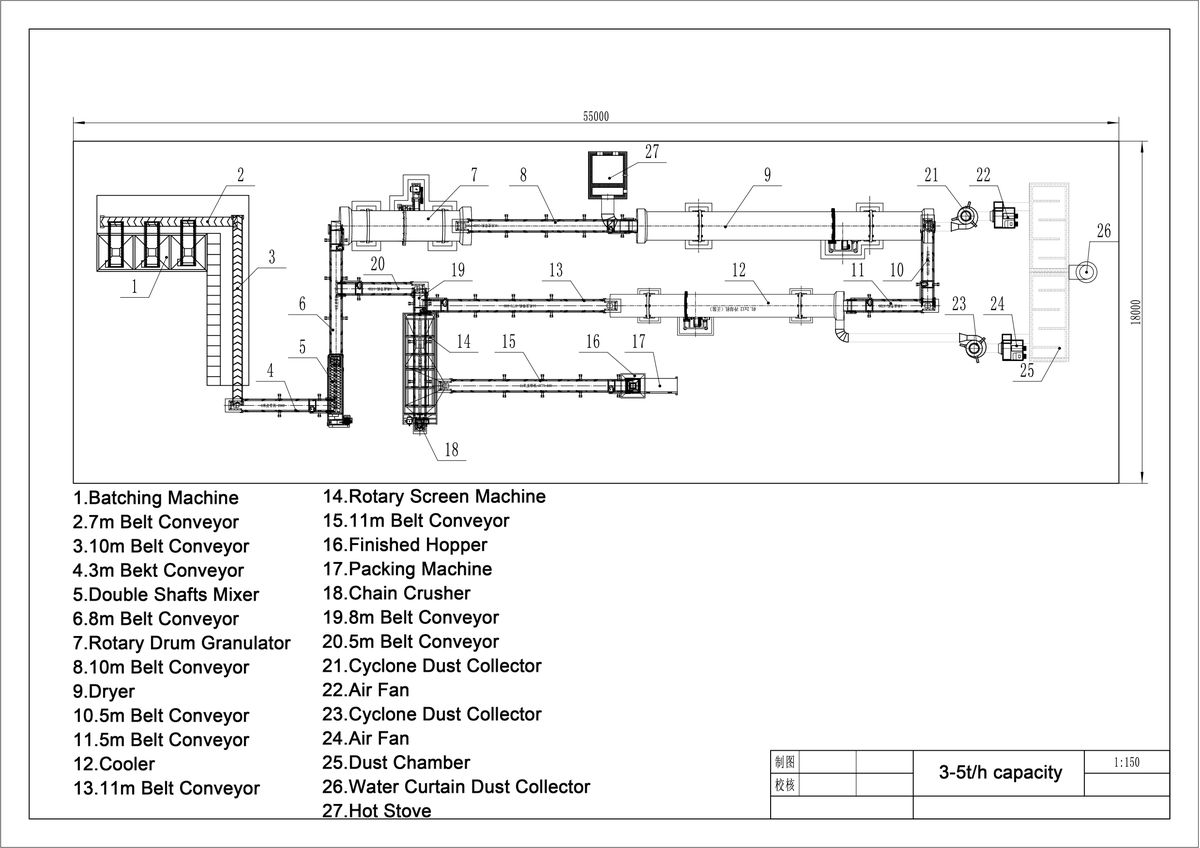
Two routes for compound fertilizer — chemical granulation and extrusion granulation — and how to choose between them.
View details →Steam and slurry drum granulation for balanced NPK formulas with precise nutrient ratios and uniform pellet shape.
View details →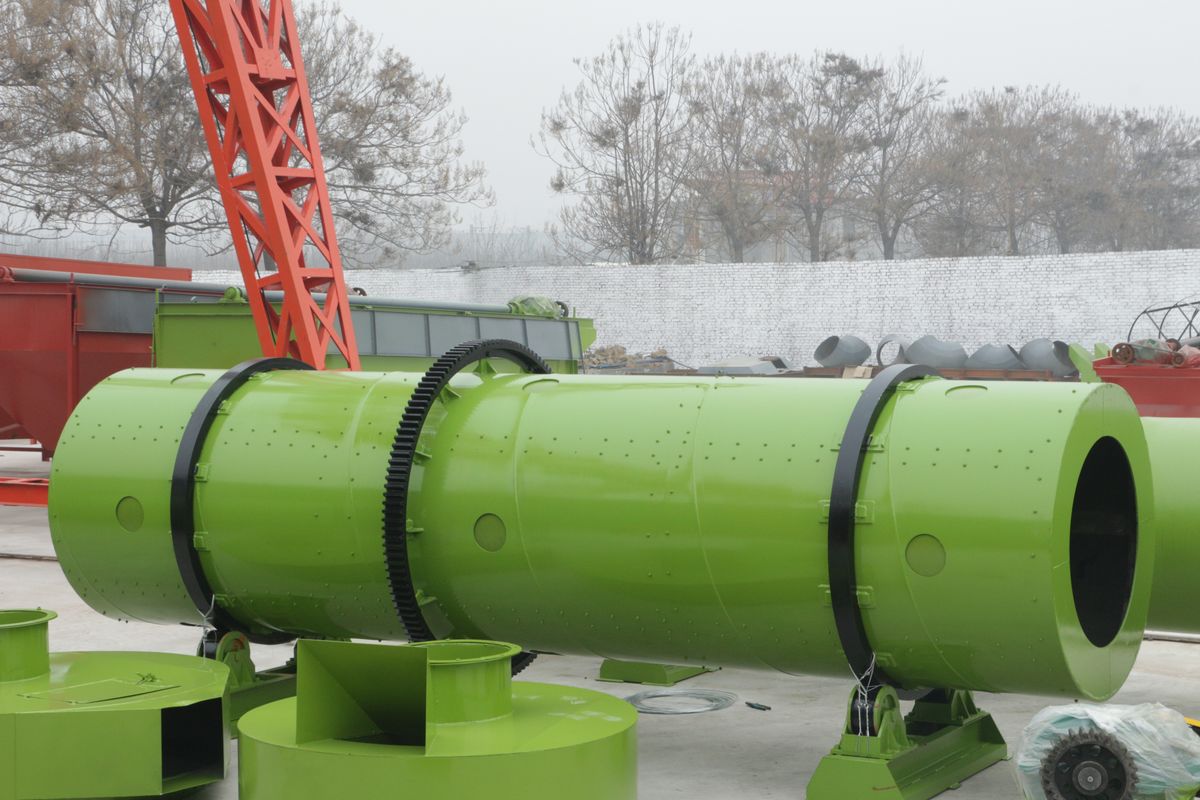
Focus on the granulation section: which granulator suits each NPK formula and how the plant is laid out.
View details →
Three popular granular fertilizer plant configurations compared, including wet and dry granulation.
View details →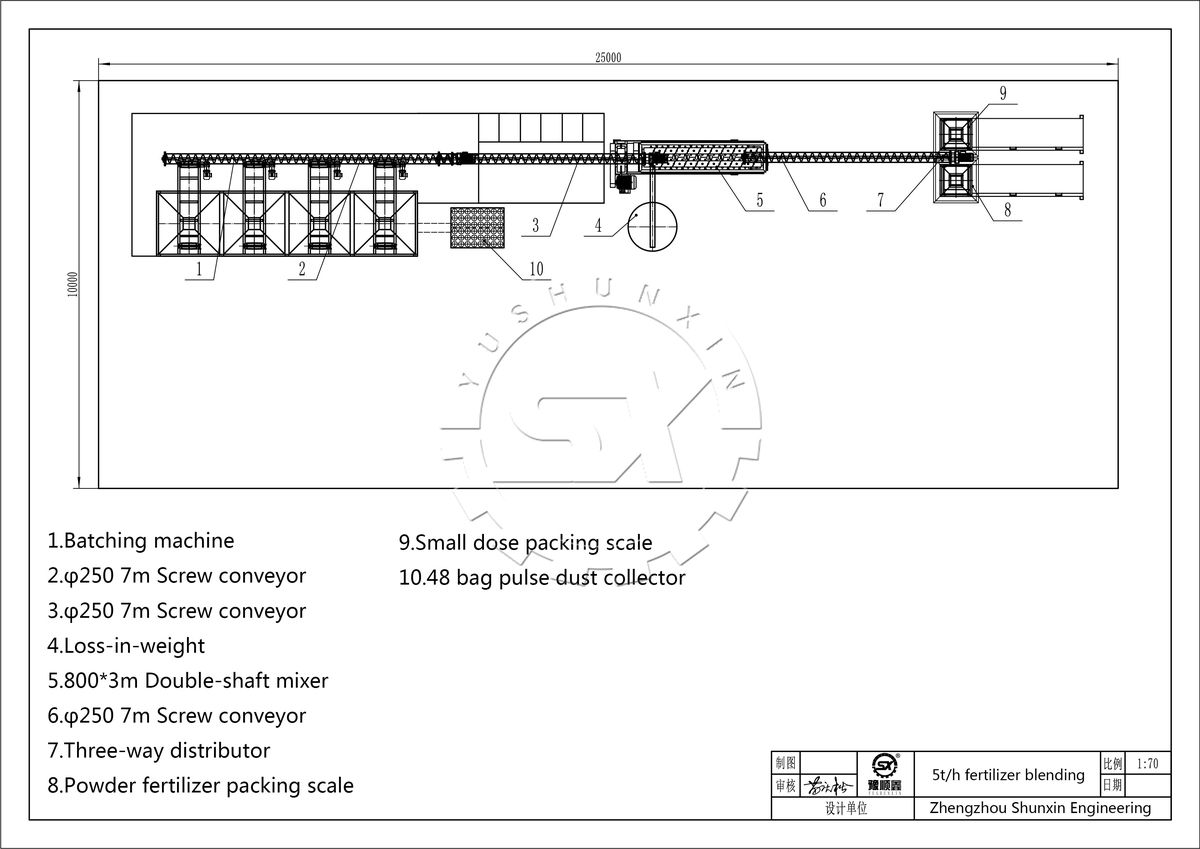
The lowest-cost route: precision dosing and blending of finished granules into custom NPK blends, with no dryer required.
View details →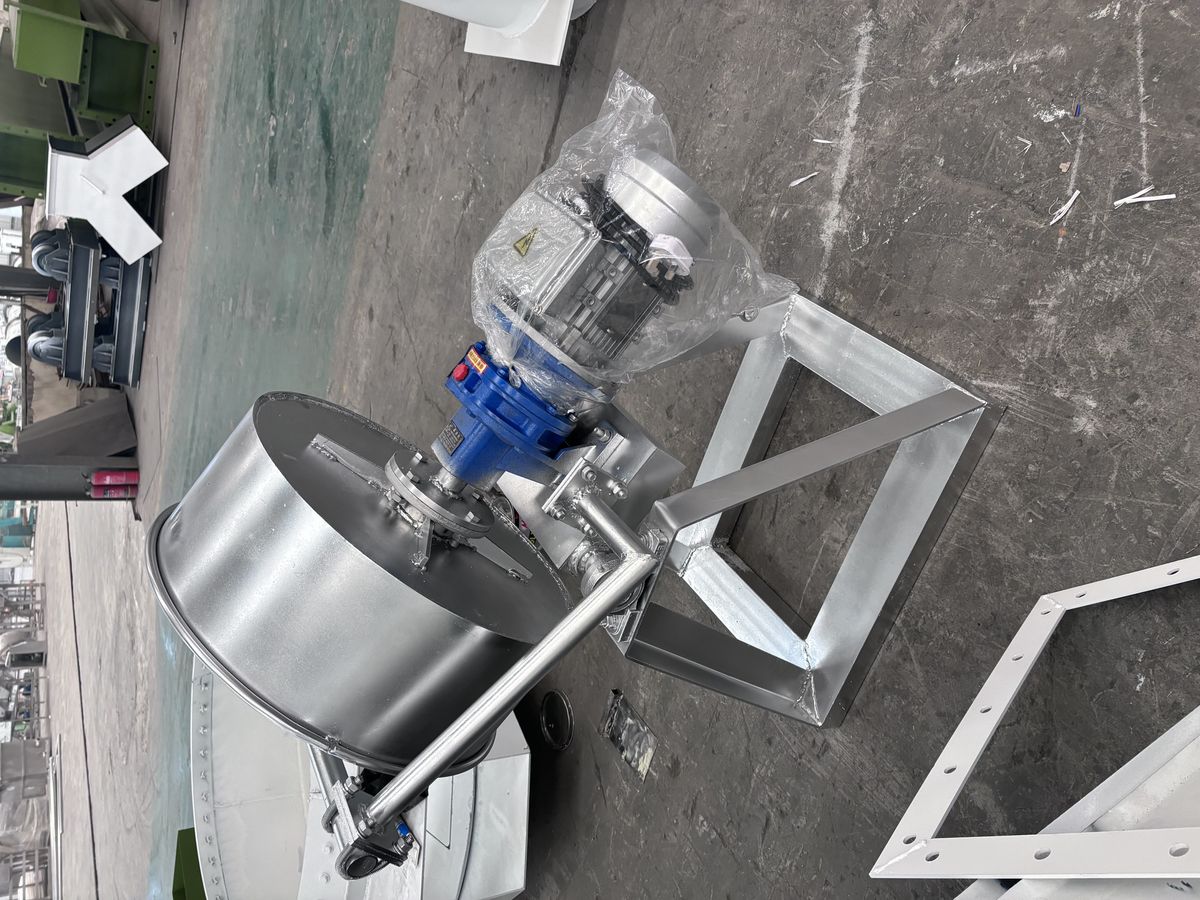
The granulator is the heart of every line — compare disc, drum, roller, wet and dry machines.
View details →We establish moisture, nutrient content, bulk density and abrasiveness, because these decide the crusher type, the granulation method and the dryer size.
Each unit is sized for the design tonnage with a 10–15% margin, and the conveying system is laid out so material flow is straight, short and gravity-assisted where possible.
You receive a plant layout and foundation drawing matched to your building and site, including power distribution points and dust-collection routing.
Machines are manufactured, assembled and test-run in our factory before shipment; you are welcome to inspect the line before it leaves.
Engineers travel to site for mechanical and electrical installation, commissioning and trial production, then train your operators.
Choose organic if your raw material is free or low-cost waste and your market buys organic fertilizer. Choose compound or NPK if you are buying chemical raw materials and selling specified nutrient ratios. Many plants run both, sharing the mixing, screening and packing sections and using different granulation units.
A 1 t/h powder organic line needs a crusher, a mixer, a screener and a packing scale. Adding granulation and drying raises the investment considerably, so most first-time producers start with powder and add a granulation section once the market is proven.
A 1–2 t/h line fits in a production hall of about 300–600 m². A 5–10 t/h granule line needs 1,000–2,500 m² of covered production area, plus fermentation space if the raw material is manure. A 20–30 t/h line usually requires 5,000 m² or more in total.
No. Powder lines and BB blending lines need no dryer. Wet granulation lines need a rotary dryer and cooler because the pellets leave the granulator at 25–35% moisture. Dry granulation with a double roller granulator is also a no-dryer process.
Photographed in our Xingyang workshop and on customer sites. Watermark-free, no phone numbers.


Cost is driven by capacity, automation and the number of process stages. A powder organic line is the least expensive; granule lines add a granulator, dryer, cooler, screener, coater and conveying system; NPK lines additionally require batching, reaction and, often, steam generation. Send us your capacity and target product for a detailed quotation.
Standard lines run from 1 t/h to 50 t/h. Because fertilizer plants usually operate 8–10 hours per day, a 5 t/h line yields roughly 40–50 tonnes of finished product per shift, which is the right scale for a regional producer.
Yes. Fully automatic lines use PLC control with automatic batching by weight, closed-loop moisture control on the dryer, automatic packing and remote monitoring. Semi-automatic lines with manual feeding are a common choice for the first years of operation and can be upgraded later.
Standard machines are delivered in 20–35 days; a complete custom line takes 45–70 days depending on the number of units. Installation and commissioning on site normally takes two to five weeks, followed by operator training.
Organic fertilizer production line from 1 to 30 t/h: fermentation, crushing, mixing, granulation, drying, screening, c…
Read more →Compound fertilizer production lines using chemical or extrusion granulation, 5–50 t/h, producing NPK and blended comp…
Read more →NPK compound fertilizer production lines with batching, crushing, mixing and drum or roller granulation, producing bal…
Read more →Bulk blending fertilizer production lines that mix finished N, P, K and filler granules into custom BB fertilizer — no…
Read more →Fertilizer granulators compared: disc (pan), rotary drum, double roller, wet and dry granulation machines, with the gr…
Read more →Waste to fertilizer solutions from Shunxin: dewatering, composting, granulating, drying and packing. Turn manure, farm…
Read more →Send your raw material, target capacity and country. Our engineers reply within one working day with a process route, equipment list and budget.
Send us your raw material and target capacity — we will propose the process, the machines and the budget.
Send your raw material and target capacity — our engineers reply within one working day with a process route, equipment list and budget.
Our engineering team will reply within one working day. For anything urgent, message us on WhatsApp.
Open WhatsApp