
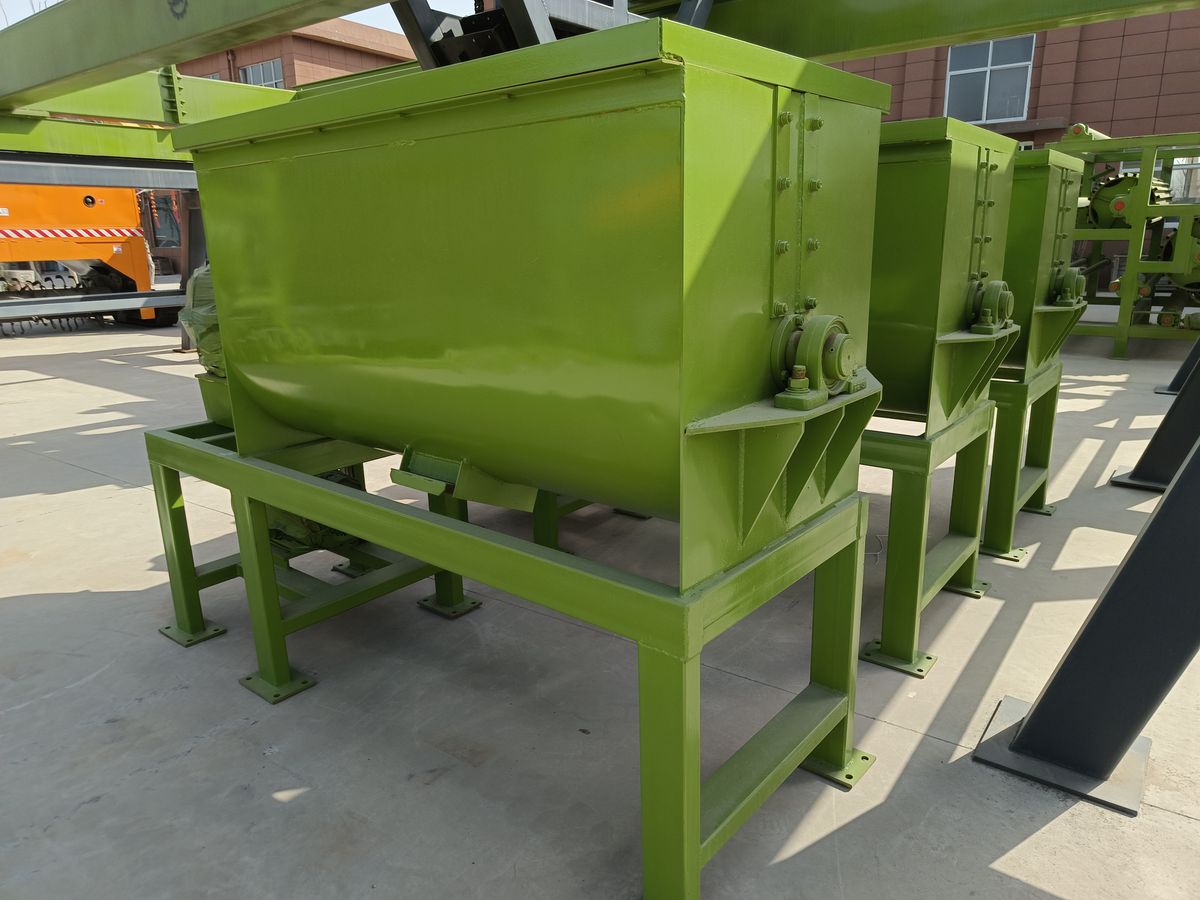
Horizontal mixer machine
Single-shaft, double-shaft and traditional horizontal mixers for blending compost with binders, additives and chemical nutrients evenly.
View details →Mixing, crushing and drying are the supporting stages that decide whether the granulator can do its job. These are the machines that carry the material between them.
In a fertilizer plant the granulator gets the attention, but the machines around it decide the result. A granulator fed with material that has not been crushed below 3 mm produces rough, weak pellets no matter how it is set. A mixer that leaves the batch uneven produces bags whose analysis does not match the label. And a dryer that delivers pellets at 18% moisture instead of 12% produces stock that cakes in the warehouse within a month.
These processing stages are also where most of the running cost sits, because crushing and drying consume far more power than granulation. Sizing them correctly — rather than oversizing for safety — is the main lever on the energy cost per tonne of finished fertilizer.
Single-shaft, double-shaft and traditional horizontal mixers for blending compost with binders, additives and chemical nutrients evenly.
View details →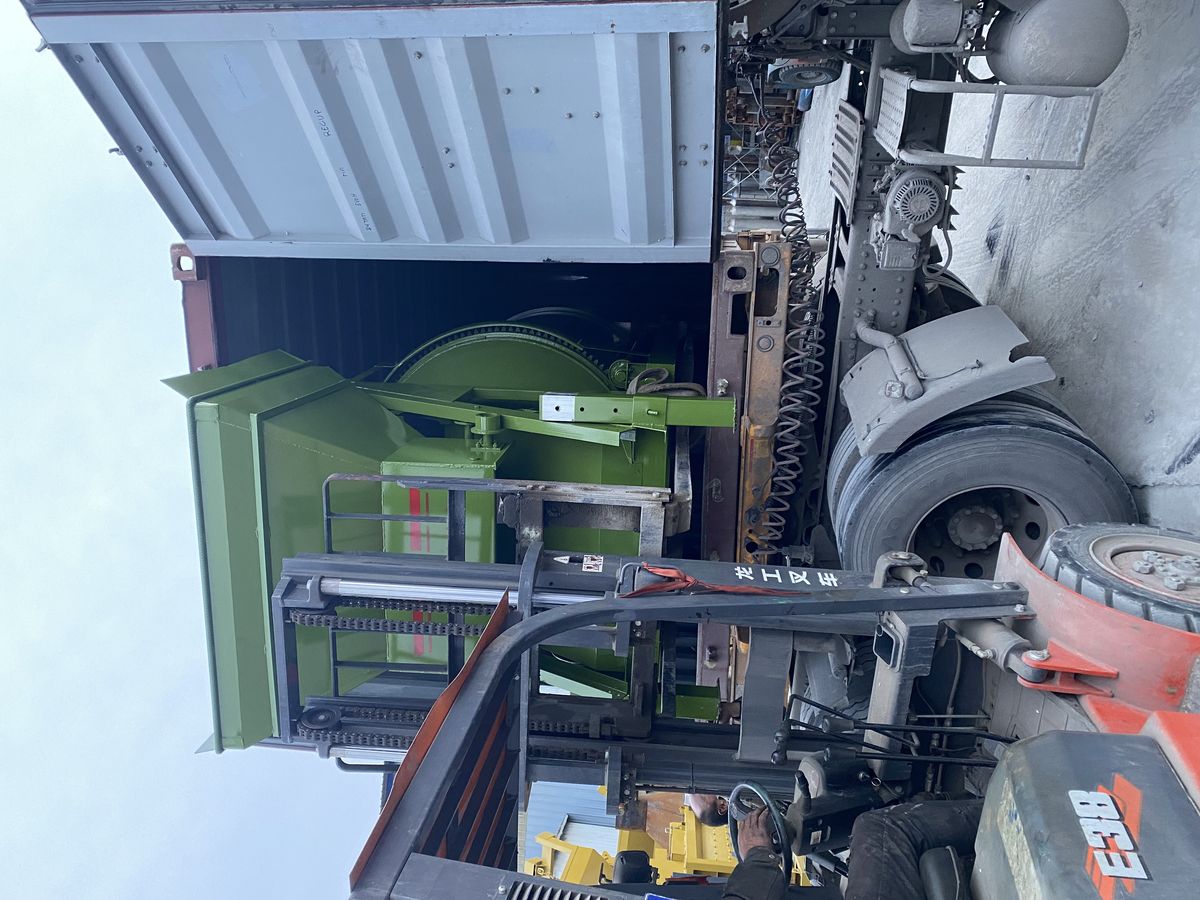
Precision blending of finished fertilizer granules for BB fertilizer production, with accurate dosing and gentle mixing.
View details →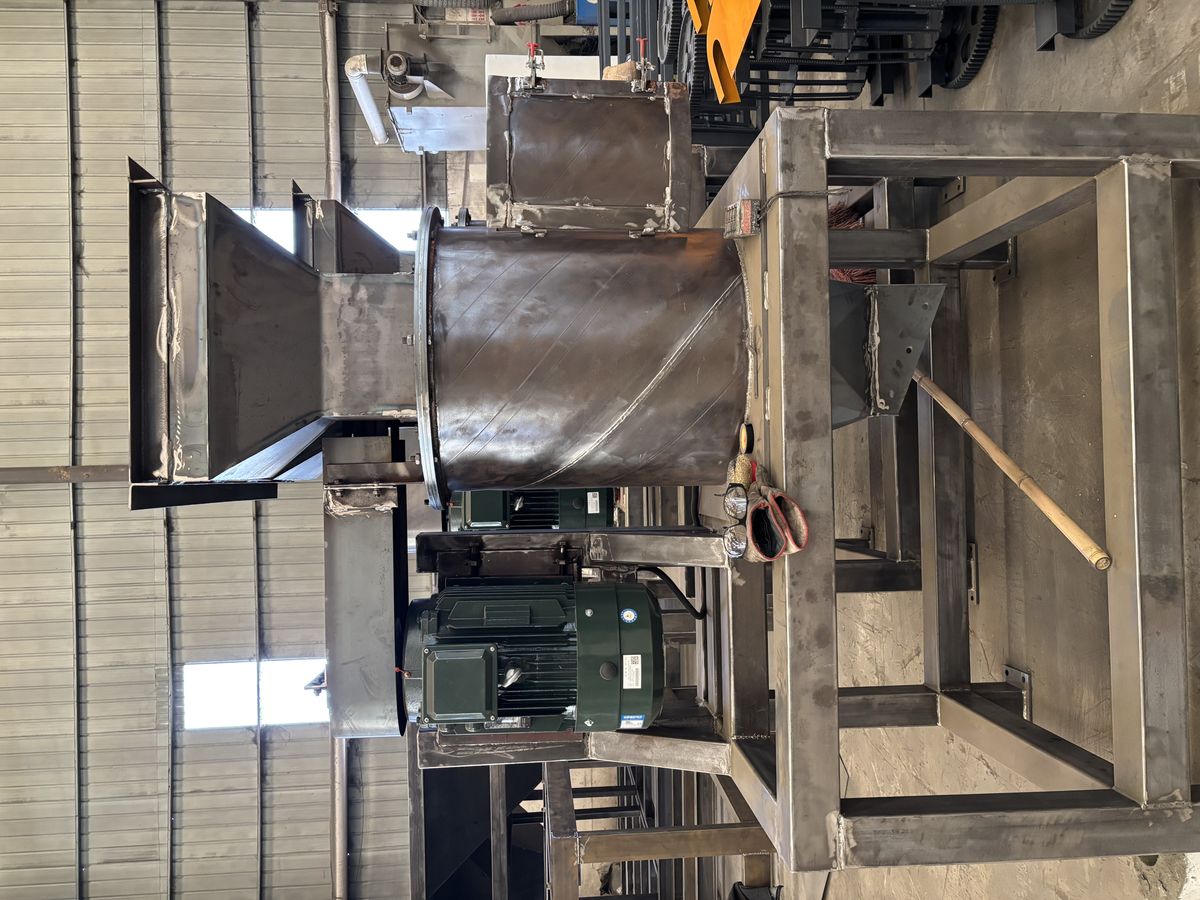
Vertical, horizontal, chain and semi-wet crushers for compost, urea and chemical raw materials, reducing material below 3 mm.
View details →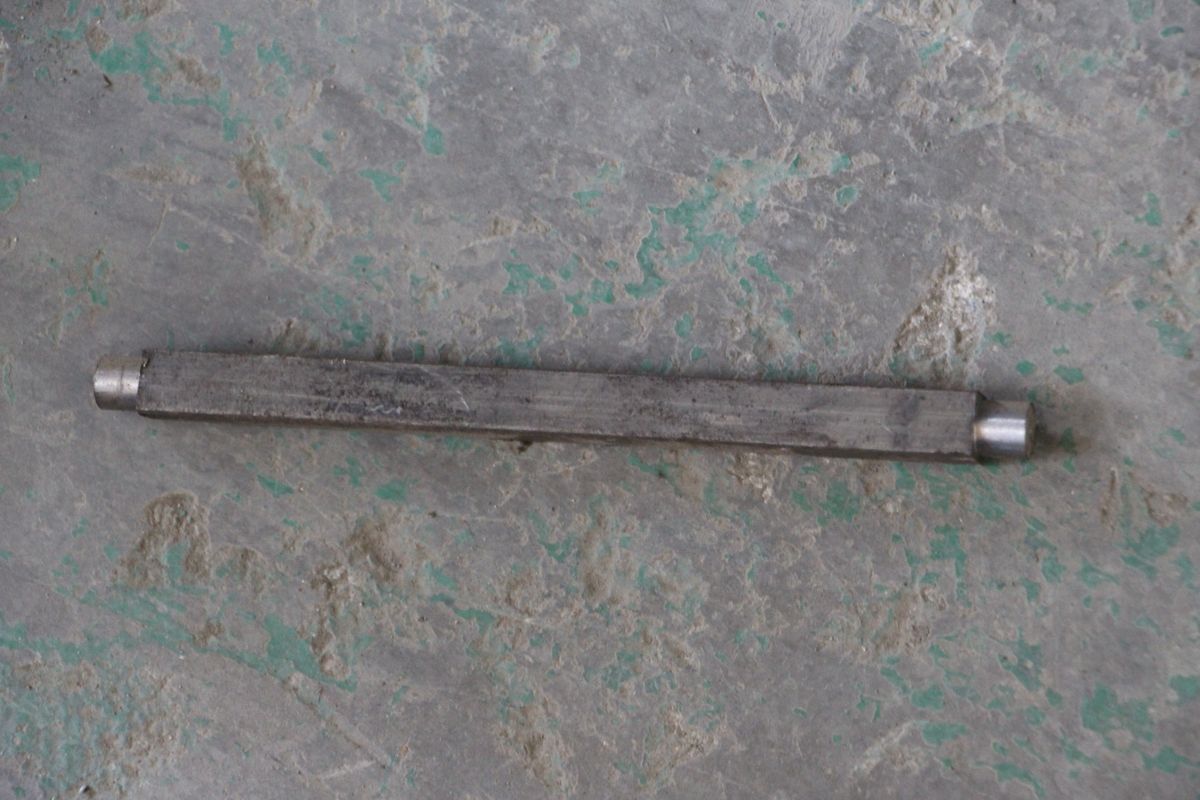
Impact-breaking cage mills for compound fertilizer materials, with 10 t/h class capacity and dust-controlled operation.
View details →
Drying and cooling to bring pellets to 12–14% moisture, plus the dust-removal and packing stages that follow.
View details →| Stage | Machine | Purpose | Typical specification |
|---|---|---|---|
| Crushing | Fertilizer crusher, cage mill | Reduce compost and chemical lumps below 3 mm | 1–20 t/h, 7.5–45 kW |
| Batching | Automatic batching system | Weigh each raw material for an accurate formula | 3–6 ingredients, ±0.5% accuracy |
| Mixing | Horizontal mixer, granules mixer | Blend nutrients, binder and additives evenly | 3–5 min cycle, 1–20 t/h |
| Drying | Rotary dryer machine | Reduce pellet moisture from 30% to 12–14% | 1–30 t/h, 7.5–75 kW |
| Cooling | Rotary cooler | Stabilise the pellet and prevent caking | Matched to dryer capacity |
| Screening | Rotary screener | Separate correct pellets, recycle oversize and fines | 1–30 t/h |
| Coating | Drum coater | Apply anti-caking film or microbial inoculant | 1–20 t/h |
| Packing | Automatic packing machine | Weigh and seal 25/40/50 kg bags or jumbo bags | 200–600 bags/hour |
Because pellets are built from particles. If the feed contains lumps above 3 mm the binder cannot wet them evenly, the pellet forms a rough surface, and it breaks during drying and handling. Crushing is the cheapest way to improve pellet quality in any fertilizer line.
A horizontal or double-shaft mixer normally needs a 3–5 minute cycle to reach uniformity: 1–2 minutes of loading, 2–3 minutes of mixing and 1 minute of discharge. Mixing much longer does not improve uniformity and reduces plant throughput.
12–14% for organic fertilizer pellets and below 2% for chemical compound fertilizer where the product is very hygroscopic. Above 15% there is enough free water for mould and caking during storage; below 10% organic pellets become brittle and produce dust.
Yes, and it is a common design. The batching, mixing, screening, coating and packing sections are shared, while the crusher and the granulator may be duplicated because organic compost and chemical salts need different machine types.
Photographed in our Xingyang workshop and on customer sites. Watermark-free, no phone numbers.


In a wet granulation line the dryer, cooler and dust-collection system together typically account for a large share of both capital and running cost, because drying is the most energy-intensive stage. In a dry granulation or BB line, processing equipment is a much smaller proportion.
Yes in almost all cases. Crushers, screeners and packing stations all generate dust, and local regulations usually require capture at source. A dust-collection system also recovers product that would otherwise be lost, so it partly pays for itself.
From the water that has to be evaporated, not from the tonnage alone. We calculate the incoming and target moisture, the tonnage per hour, the inlet and outlet air temperatures and the fuel type, then select the drum diameter, length and burner accordingly.
Yes. Customers upgrading an existing plant regularly buy just a crusher, mixer, dryer or screener. We size the unit to match your existing equipment and confirm the connection dimensions before manufacture.
Horizontal fertilizer mixer machines: single-shaft, double-shaft and traditional designs that blend compost, binder an…
Read more →Granules mixing machines for BB fertilizer blending: accurate dosing and gentle mixing of finished N, P, K granules wi…
Read more →Fertilizer crushers for organic compost, NPK chemicals and semi-wet material: vertical, horizontal, chain and cage cru…
Read more →Cage mill crushers use impact breaking to crush compound fertilizer materials into fine powder, with 10 t/h class capa…
Read more →Rotary dryer machines reduce fertilizer pellet moisture to 12–14%, with matched cooling, dust removal and packing stag…
Read more →
Complete fertilizer production lines from 1 to 50 t/h: organic, bio-organic, compound, NPK and bulk blending (BB) plan…
Read more →Send your raw material, target capacity and country. Our engineers reply within one working day with a process route, equipment list and budget.
Send us your raw material and target capacity — we will propose the process, the machines and the budget.
Send your raw material and target capacity — our engineers reply within one working day with a process route, equipment list and budget.
Our engineering team will reply within one working day. For anything urgent, message us on WhatsApp.
Open WhatsApp