
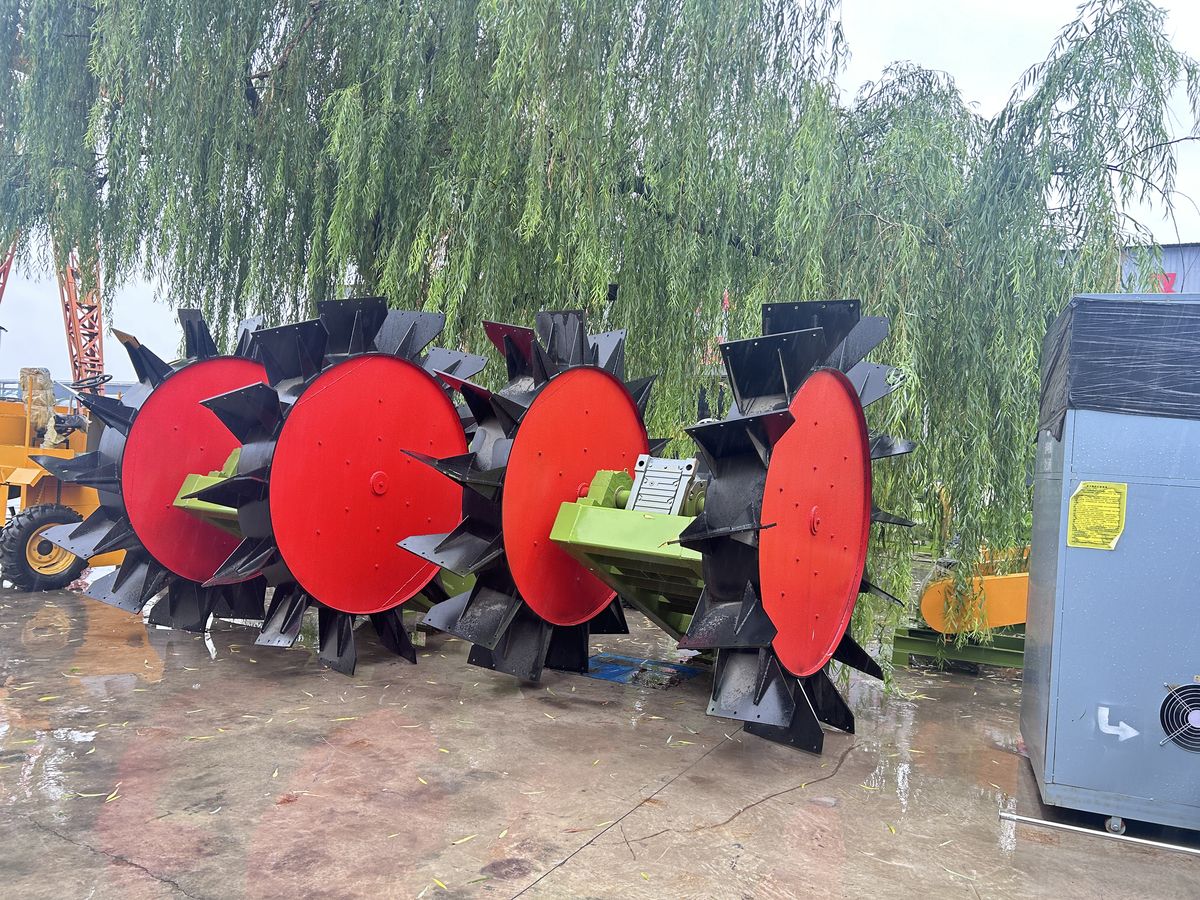
Compost turner equipment
Overview of the full composting range and how to match a turner to your pile, tonnage and site.
View details →Fermentation is the stage that decides the quality of everything downstream. The right compost turner keeps the pile aerobic, holds 55–65 °C and turns raw manure into mature compost in 7–15 days.
Composting looks simple — pile the manure and wait — but a commercial composting plant has four jobs to do reliably: keep oxygen moving into the pile so it stays aerobic, hold the core above 55 °C long enough to kill pathogens and weed seeds, keep the moisture at 55–65% so microbes stay active, and turn the material often enough that the outside of the pile spends time in the hot core. Every type of composting equipment is a different mechanical answer to those four jobs.
The choice between windrow turners, groove-type (channel) turners, self-propelled machines, forklift turners and in-vessel fermentation vessels is therefore driven by volume, available space, climate and how strictly odour is regulated. Below, each type is described with the tonnage range it suits best.
Overview of the full composting range and how to match a turner to your pile, tonnage and site.
View details →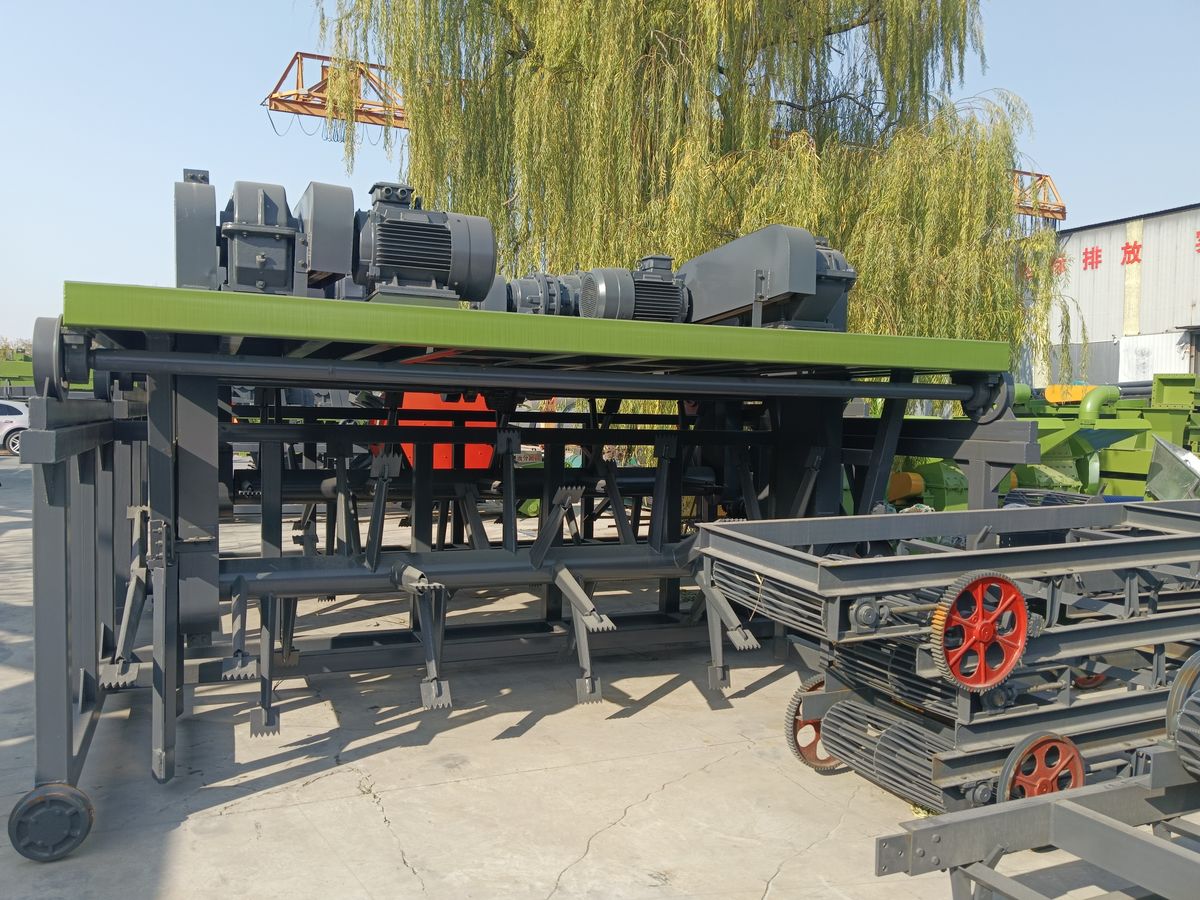
Groove type, wheel type and chain plate turners for municipal and industrial composting at 100–1,000 t/day.
View details →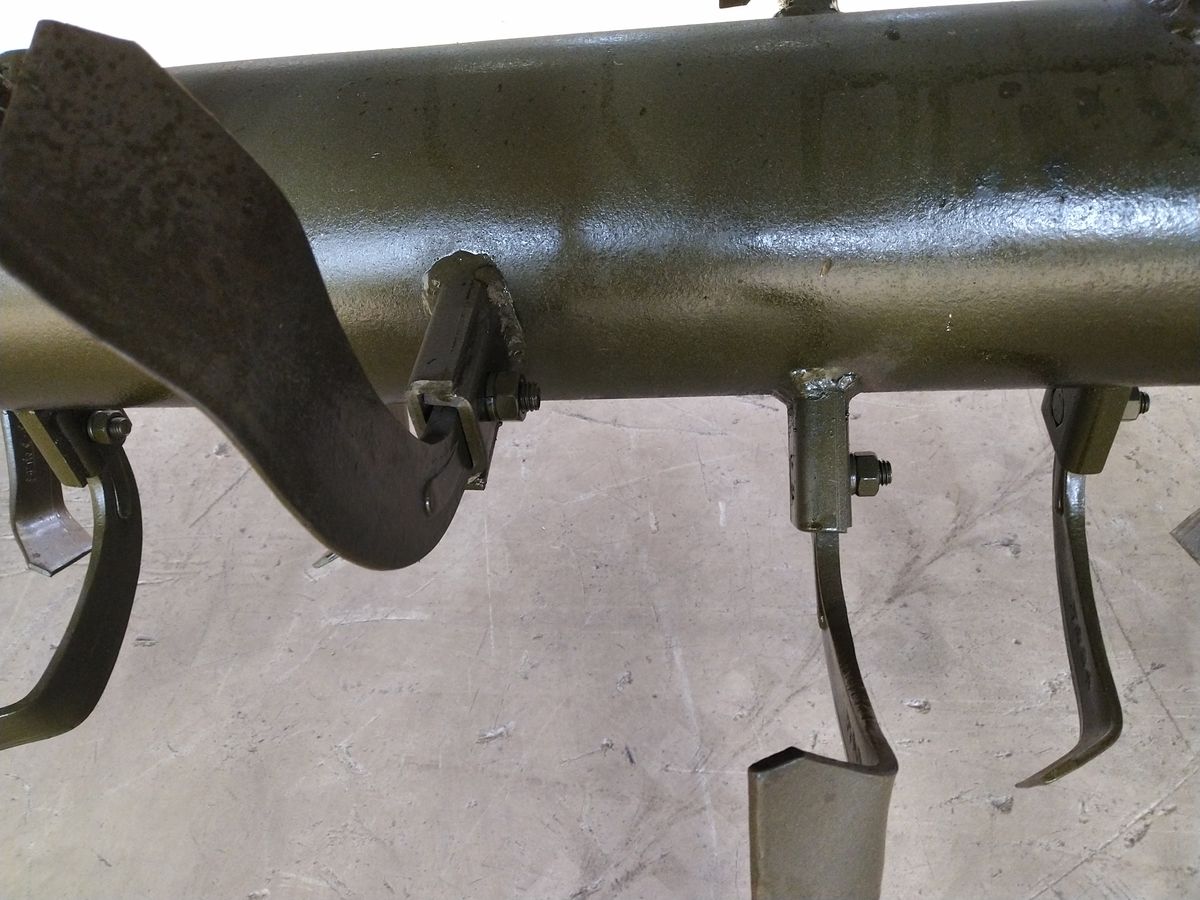
Crawler and moving-type windrow turners for open-air piles; the most cost-effective option for farm-scale composting.
View details →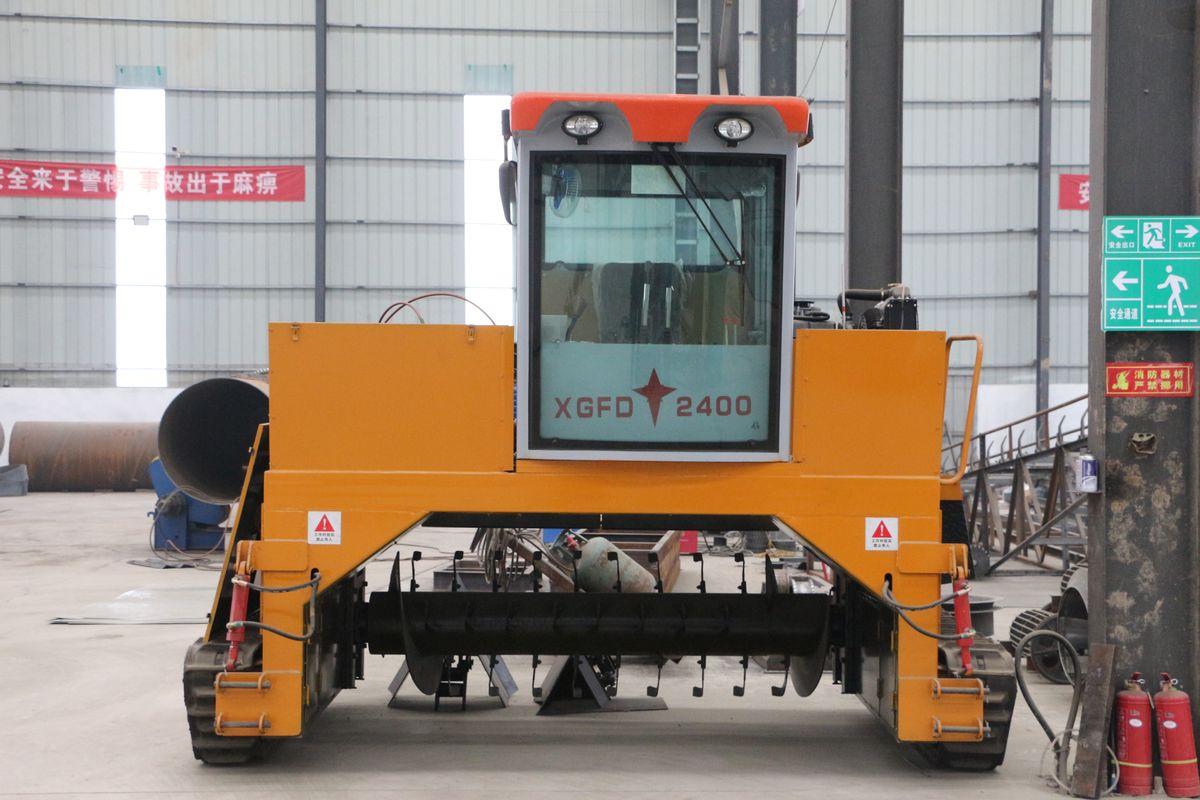
A single operator drives, turns and re-piles; ideal where labour is expensive and the windrow layout changes.
View details →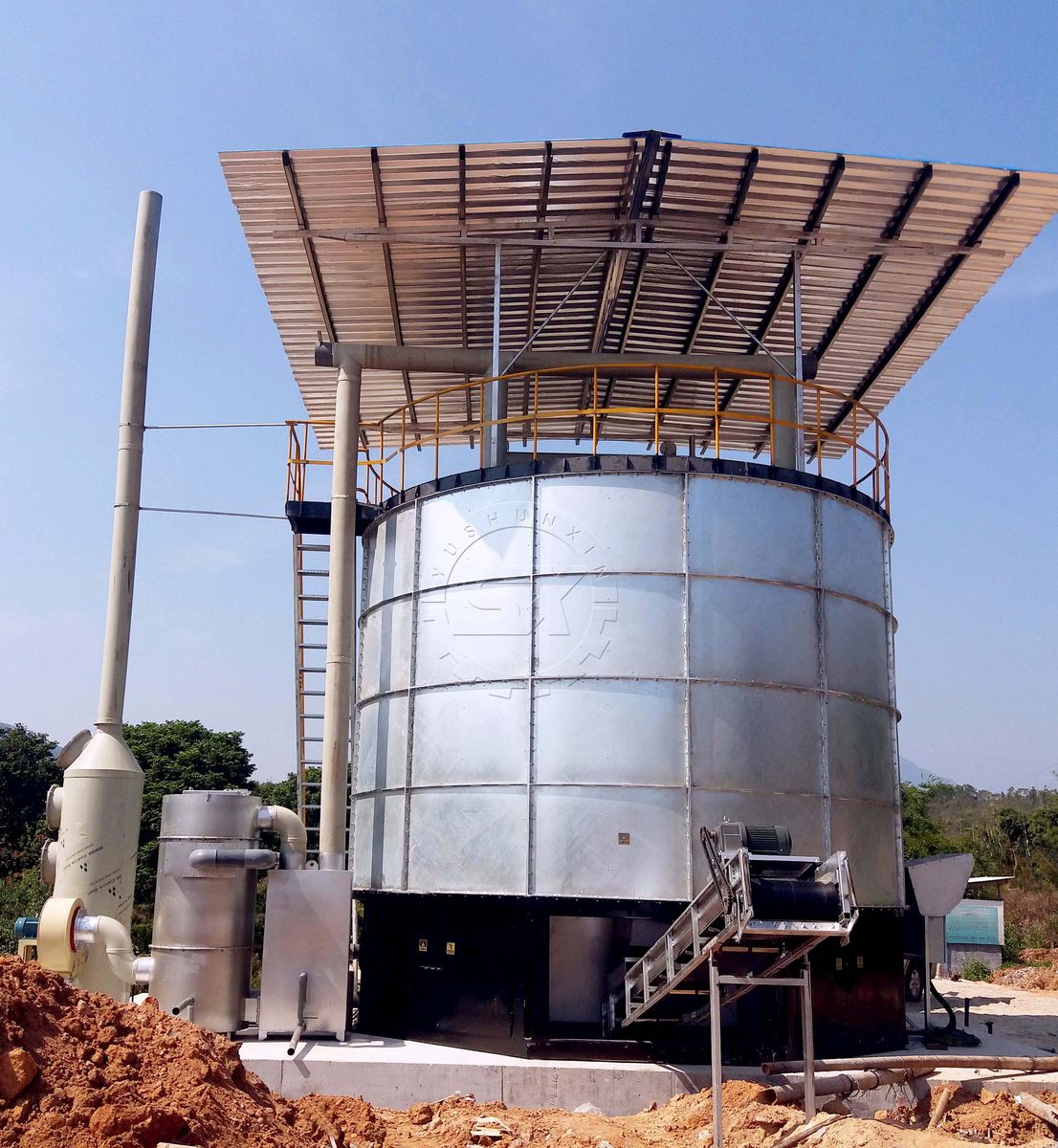
Closed fermentation tanks with forced aeration for odour-sensitive sites and wet, high-nitrogen waste.
View details →The complete manure composting set: separator, turner, deodorising and screening, sized to your herd.
View details →Systems designed around wet, ammonia-rich poultry litter and poultry mortality composting.
View details →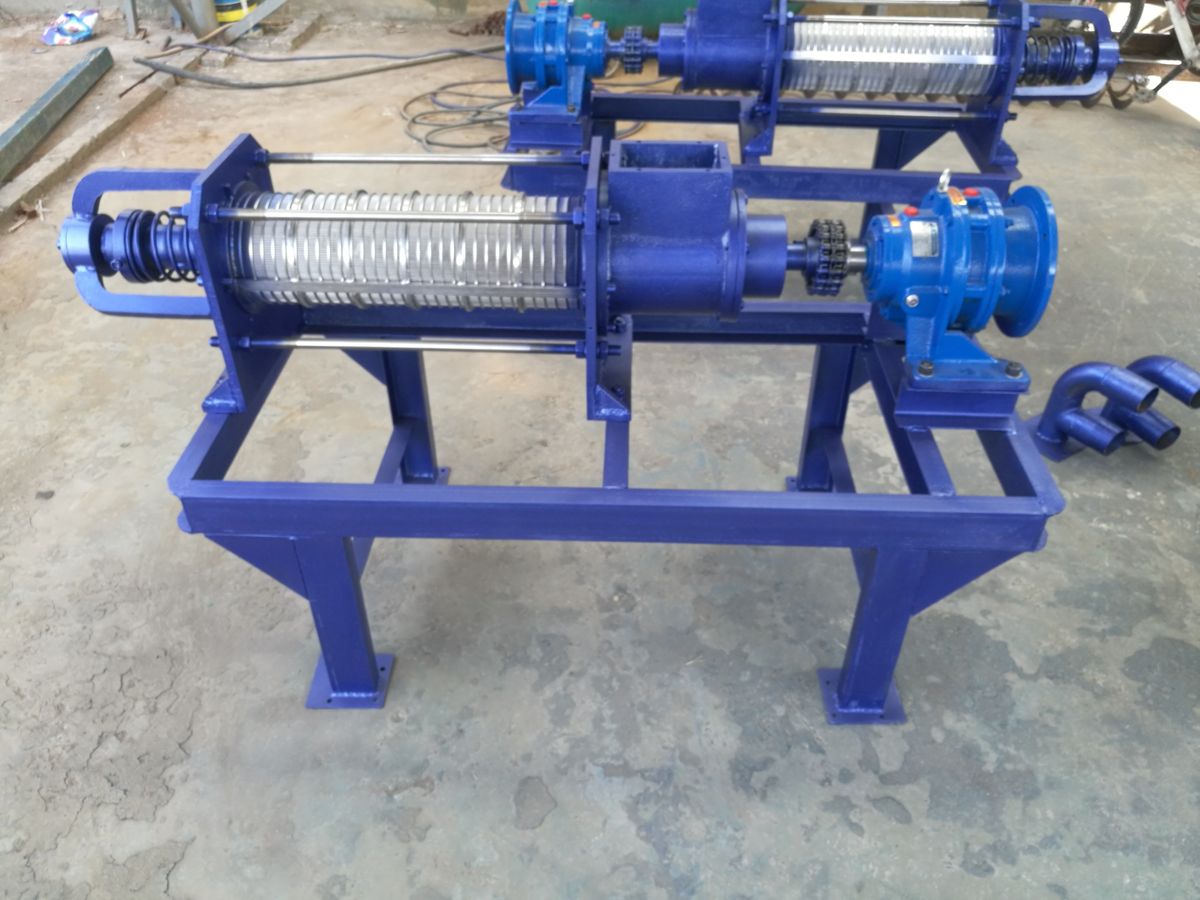
Dewater slurry before composting so the pile behaves and the drying cost falls.
View details →| Equipment type | Capacity | Footprint | Odour control | Best application |
|---|---|---|---|---|
| Small windrow turner | 50–200 t/day | Open pad, 3 m windrows | Moderate | Farms, cooperatives |
| Crawler / moving windrow turner | 100–500 t/day | 4–6 m windrows, open pad | Moderate | Commercial farms, fertilizer plants |
| Self-propelled compost turner | 200–800 t/day | Wide open pad | Moderate | Large farms, contractor services |
| Groove-type (channel) turner | 100–1,000 t/day | Concrete fermentation channels | Moderate to high | Municipal plants, fixed-layout factories |
| Chain plate turner | 200–1,000 t/day | Deep fermentation bays | High | Industrial composting |
| In-vessel fermentation tank | 5–100 t/day | Compact, indoor possible | Very high | Food waste, urban sites, odour-sensitive areas |
| Forklift compost turner | 50–300 t/day | Open pad | Low to moderate | Existing forklift fleets, low investment |
Measure moisture, carbon/nitrogen ratio and particle size. Add straw, sawdust or finished compost to bring the ratio to 25–30:1 and moisture to 55–65%.
Allow a concrete or compacted pad with drainage and leachate collection. Windrows of 1.5–2 m height and 3–6 m width are standard; channels are cast to the turner's track width.
Layer carbon and nitrogen material in a 3:1 ratio and start turning immediately. Add a mature-compost starter to shorten the lag phase.
Turn daily for the first week, then every two or three days. Monitor temperature with a probe; turn whenever the core falls below 50 °C or rises above 70 °C.
After 7–15 days the pile cools and stops reheating. Screen the compost, reuse the oversize as a bulking agent and send the fines to granulation or packing.
Daily for the first 5–7 days while the pile is heating, then every 2–3 days until it cools. The rule is simpler than the schedule: turn when the core temperature drops below 50 °C, because that means oxygen is running out and the pile is going anaerobic.
55–65 °C. Above 55 °C pathogens and weed seeds are destroyed; above 65 °C the thermophilic bacteria that do the work start to die off and the pile is losing nitrogen as ammonia. Below 45 °C the composting process slows markedly.
7–15 days of active thermophilic fermentation, followed by 10–20 days of maturation before the compost is fully stable. Adding a bacterial starter, keeping the moisture near 60% and turning on schedule compresses this to the lower end of the range.
In heavy-rainfall regions yes, or at least a covered drainage system. Excess rain waterlogs the pile, causes leachate and lengthens the cycle. Many customers use a simple steel structure over the windrow area, which also improves odour management.
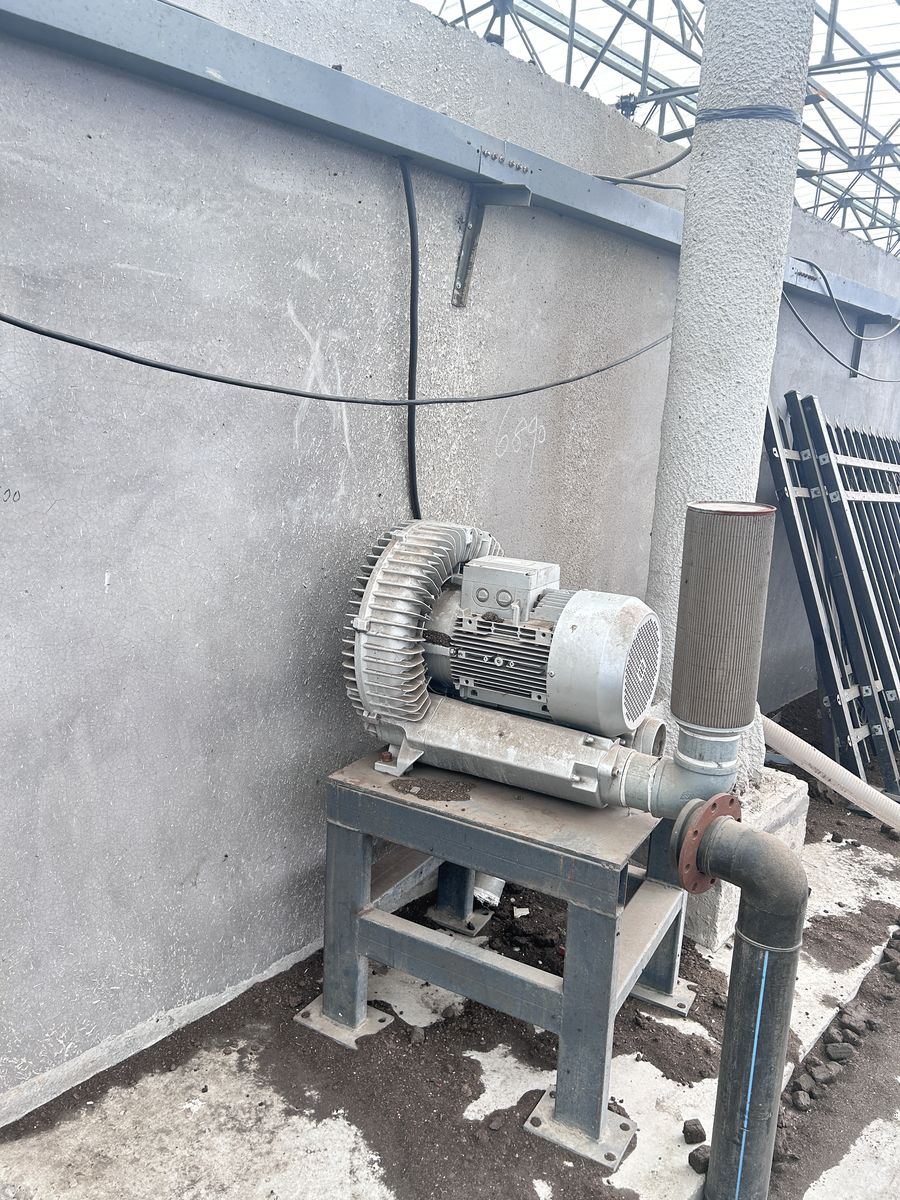
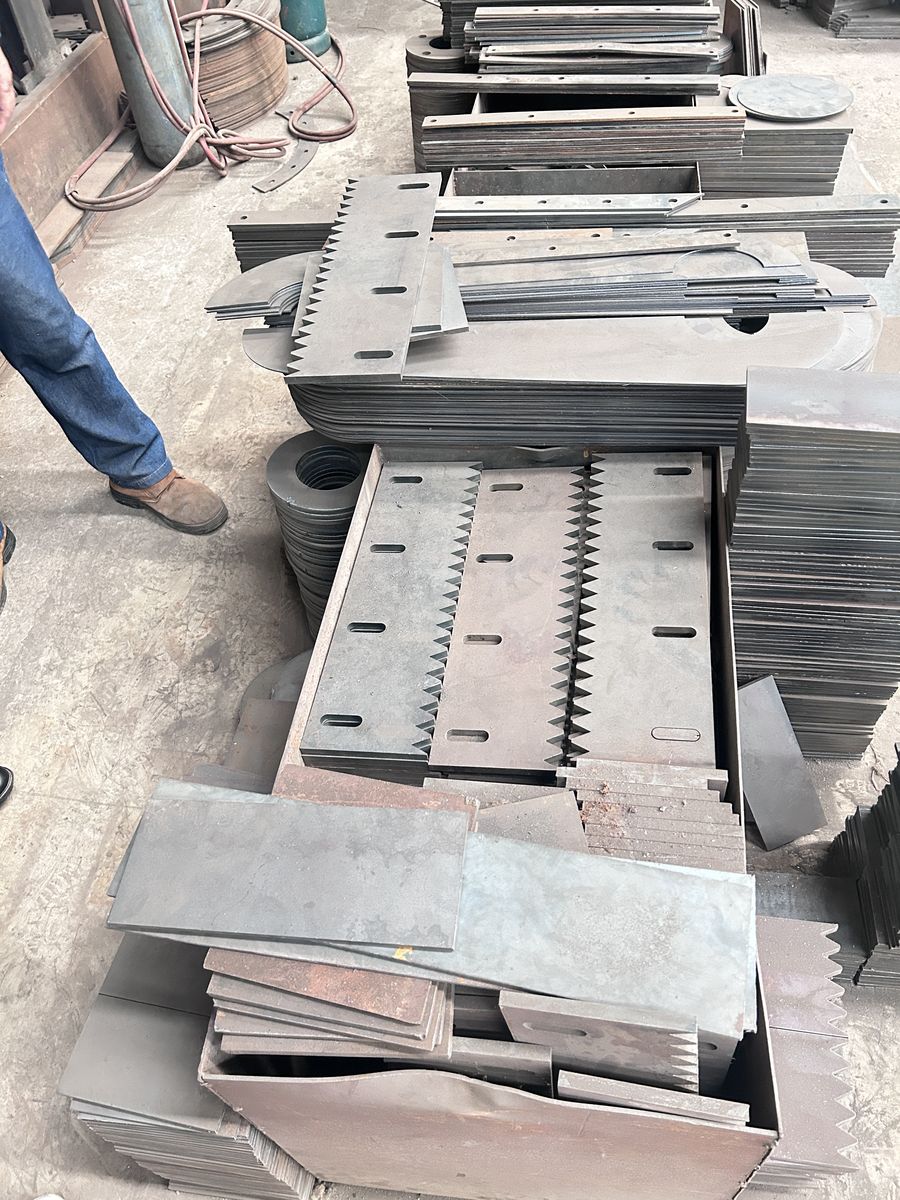
Photographed in our Xingyang workshop and on customer sites. Watermark-free, no phone numbers.



For most farms a crawler or moving-type windrow turner is the best value: it is self-contained, does not need a concrete channel, and handles up to about 500 t/day. If labour is scarce or the site is cramped, a self-propelled turner or a small in-vessel tank is worth the extra cost.
A small windrow turner starts at a modest investment and scales with turning width and engine power. Groove-type turners and in-vessel fermentation tanks cost more because they include rails, aeration piping or a concrete structure, but they deliver tighter process control and much better odour containment.
Yes, but the pile will be slower and the outer layer freezes. Practical measures are to build slightly larger piles, insulate with a layer of finished compost or straw, turn less often but more thoroughly, and use in-vessel fermentation where the vessel itself provides insulation.
Crushing, mixing and either packing as powder or granulation. Compost leaving the pile is 55–65% moisture and 0–30 mm in size, so a crusher and screener are always needed; a granulator, dryer, cooler and coater are added if pellets are the target.
Composting equipment for sale: windrow, groove, self-propelled and in-vessel compost turners for manure, sludge and or…
Read more →Large scale compost turner machines for 100–1,000 t/day plants: groove-type, wheel-type and chain plate turners for mu…
Read more →In vessel composting equipment with closed aerobic fermentation tanks, forced aeration and temperature control — ideal…
Read more →Manure composting equipment: separators, turners and deodorising systems that convert cattle, pig and poultry manure i…
Read more →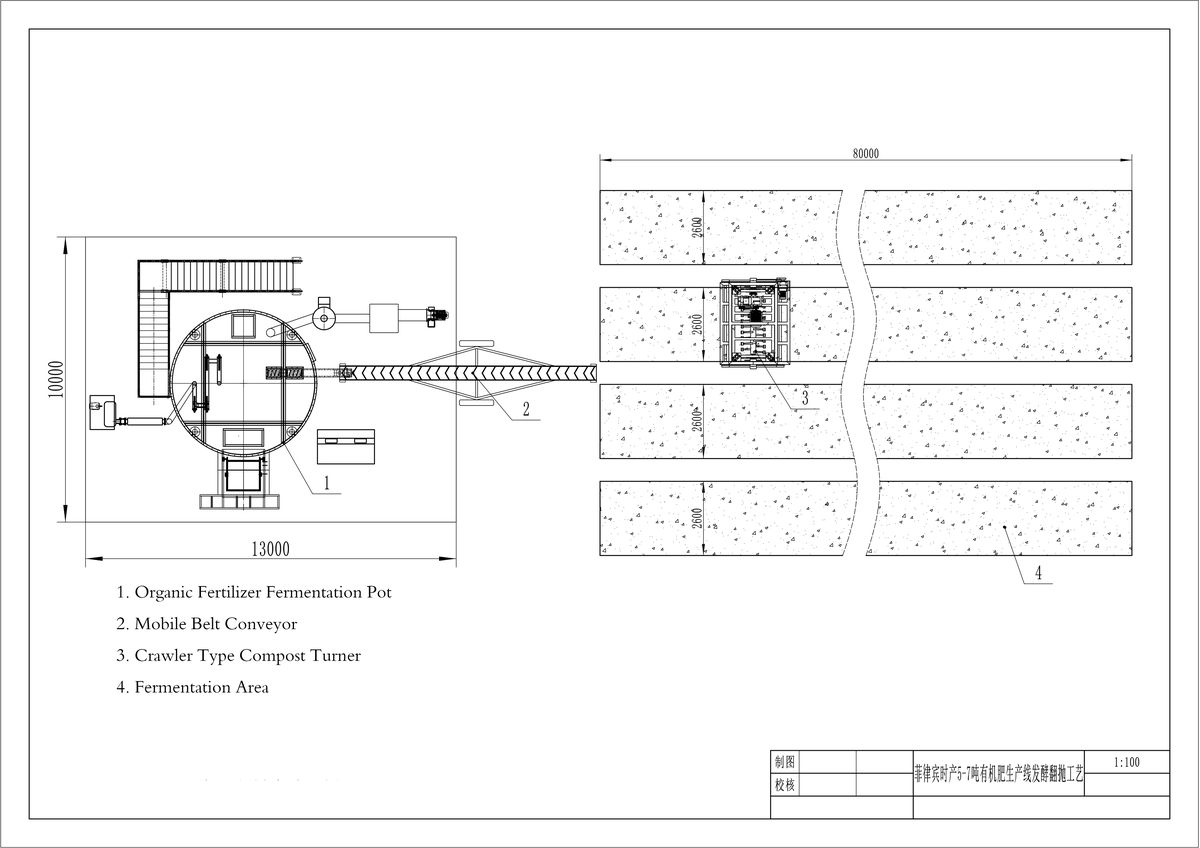
Waste to fertilizer solutions from Shunxin: dewatering, composting, granulating, drying and packing. Turn manure, farm…
Read more →Complete fertilizer production lines from 1 to 50 t/h: organic, bio-organic, compound, NPK and bulk blending (BB) plan…
Read more →Send your raw material, target capacity and country. Our engineers reply within one working day with a process route, equipment list and budget.
Send us your raw material and target capacity — we will propose the process, the machines and the budget.
Send your raw material and target capacity — our engineers reply within one working day with a process route, equipment list and budget.
Our engineering team will reply within one working day. For anything urgent, message us on WhatsApp.
Open WhatsApp